
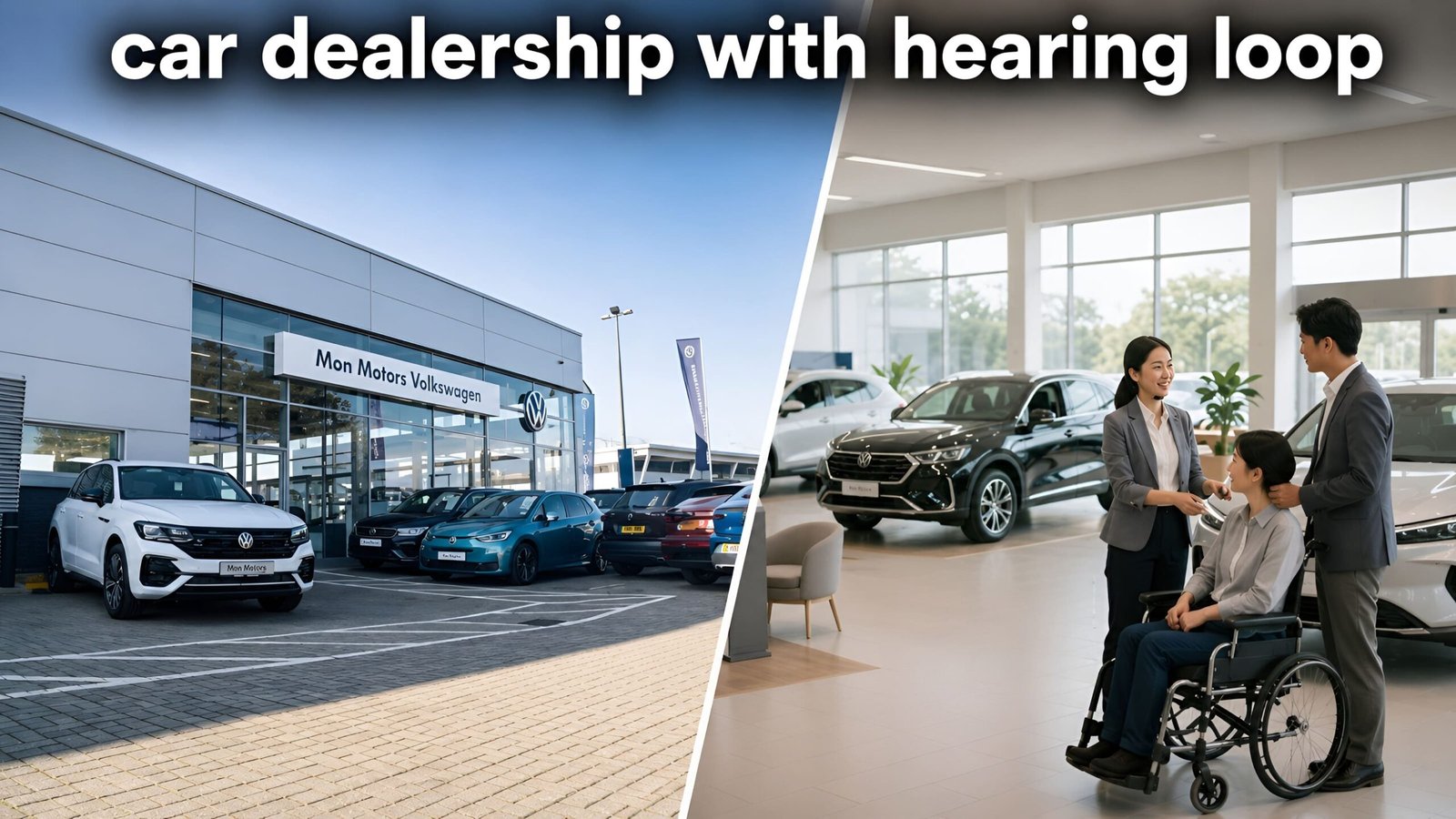
A car dealership with a hearing loop is an accessible automotive environment designed to improve communication for customers with hearing difficulties. It uses assistive listening technology that transmits clear audio directly into compatible hearing aids, reducing background noise and improving speech clarity. This ensures that customers can better understand vehicle specifications, pricing details, financing options, and service information during the buying process. The system supports equal communication access, helping create a more transparent, comfortable, and stress-free car purchasing experience where all customers can participate confidently in discussions and make informed decisions without communication barriers.
What is Car Dealership with Hearing Loop ?
A car dealership with a hearing loop refers to an automotive showroom that is designed to improve accessibility for customers who experience hearing difficulties. It integrates assistive listening technology into consultation and sales areas to ensure spoken communication is transmitted clearly without interference from background noise. This allows customers to understand important discussions related to vehicle selection, pricing structures, warranty terms, and financing options in a more effective way.
In practical terms, this type of dealership removes communication barriers by enhancing audio clarity through technology. The hearing loop system sends sound directly into compatible hearing aids, ensuring that speech remains clear even in noisy environments. This creates a more inclusive and equitable experience where customers can fully participate in conversations and make confident decisions throughout the car buying process.
How Hearing Loop Technology Works
A hearing loop system operates by capturing spoken voice through a microphone connected to an amplifier system. The amplified signal is then converted into a magnetic field that is picked up directly by hearing aids equipped with telecoil functionality. This process eliminates most surrounding environmental noise and delivers clear, focused speech to the listener.
In a dealership setting, this technology is particularly valuable because showrooms often contain multiple conversations, background music, and general ambient noise. The hearing loop ensures that customers can still hear staff clearly during discussions about vehicle models, pricing breakdowns, and financing options. This improves communication accuracy, reduces misunderstandings, and supports a smoother and more efficient buying process.
Importance in Car Buying Experience
Clear communication is essential in the car buying journey because customers must understand complex information before making a purchase decision. This includes technical vehicle features, financial agreements, insurance details, and long-term service conditions. Without clear understanding, customers may feel uncertain or make decisions that do not fully meet their needs.
Assistive listening systems help improve communication clarity and reduce misunderstandings between staff and customers. By ensuring that hearing-impaired individuals can follow conversations without difficulty, dealerships create a more transparent environment. This supports fair decision-making and ensures that every customer receives equal access to important purchasing information.
Benefits of Accessible Dealerships
Accessible dealerships improve customer satisfaction by ensuring communication is clear, consistent, and easy to understand. Assistive listening systems reduce the need for repeated explanations and help customers absorb information more effectively during consultations.
They also strengthen trust between customers and dealership staff. When communication is smooth and accurate, customers feel more confident in their decisions and the information being provided. This leads to a more positive customer experience and enhances the reputation of the dealership as a professional and inclusive business.
Customer Experience and Inclusion
Inclusive dealerships are designed to create a welcoming environment where all customers feel valued regardless of their hearing ability. Assistive listening systems play an important role in ensuring that communication remains clear and accessible throughout the visit.
This improves the overall customer experience by reducing stress and making interactions more comfortable. Customers can engage more actively in discussions, ask questions freely, and fully understand responses without difficulty. As a result, the car buying journey becomes more engaging, respectful, and customer-friendly.
Role of Staff and Communication
Staff training is an important factor in ensuring accessibility systems function effectively within car dealerships. Employees must understand how to operate assistive listening systems and how to communicate clearly and patiently with all customers.
When staff are properly trained, communication becomes more efficient and professional. Misunderstandings are minimized, and customers receive accurate information without confusion. This improves service quality and ensures a consistent and supportive experience throughout the entire buying process.
Modern Automotive Accessibility
Modern automotive dealerships are increasingly adopting accessibility-focused technologies as part of improved customer service standards. These technologies are designed to make communication easier and ensure equal access to information for all customers.
Assistive listening systems are part of a broader shift toward inclusive showroom environments. Alongside digital tools and improved service design, they help create a more seamless and accessible experience where customers can interact confidently and comfortably.
Business Value of Accessibility
Accessibility is not only a service improvement but also a long-term business advantage. Dealerships that invest in inclusive communication systems often build stronger customer trust and loyalty over time.
When customers feel understood and supported, they are more likely to complete purchases and recommend the dealership to others. This enhances reputation, increases customer retention, and strengthens overall brand reliability in a competitive automotive market.
Future of Inclusive Dealerships
The future of automotive retail is moving toward fully inclusive and technology-driven environments. Communication systems will continue to evolve, improving accessibility and customer experience across all areas of the showroom.
Assistive listening technology will remain an important component of this development. Combined with digital innovations and smart showroom systems, it will help create a more transparent, efficient, and equal vehicle buying experience for all customers.
Real-World Customer Scenario
In a typical dealership environment, a customer with hearing difficulties may struggle to follow conversations due to background noise and multiple ongoing discussions. However, with assistive listening technology, communication becomes significantly clearer and easier to understand.
This allows the customer to engage fully in discussions about vehicle options, pricing, and financing without confusion. The result is a more comfortable, confident, and stress-free buying experience where decisions are made with complete understanding and clarity.
Legal and Ethical Importance
Accessibility in public service environments is increasingly recognized as an important ethical responsibility. While regulations vary by region, many organizations are encouraged to provide equal access to communication for all customers.
Implementing assistive listening systems demonstrates a commitment to fairness and inclusivity. It reflects a dealership’s dedication to providing equal service quality and improving customer experience regardless of individual hearing ability.
Technology Integration in Dealerships
Modern dealerships are integrating multiple technologies to enhance communication and customer service. These include digital displays, interactive systems, and assistive listening tools that work together to improve the overall showroom experience.
Such integration ensures that customers receive clear, accurate, and accessible information during their visit. It supports better understanding and helps streamline the decision-making process in a more efficient and user-friendly way.
Conclusion
Accessible automotive environments represent an important advancement in customer-focused service design. Assistive listening systems improve communication clarity, reduce barriers, and ensure that all customers can fully participate in the car buying process.
This leads to a more transparent, inclusive, and trustworthy experience. As the automotive industry continues to evolve, accessibility will remain a key factor in shaping modern showroom standards and improving overall customer satisfaction.
FAQs
What is a car dealership with a hearing loop?
A car dealership with a hearing loop is an accessible showroom that uses assistive listening technology to help hearing-impaired customers clearly understand conversations during car buying.
How does a hearing loop system work?
It works by converting spoken voice into a magnetic signal that is directly transmitted into hearing aids, improving speech clarity and reducing background noise.
Why is hearing loop important in car dealerships?
It is important because it ensures clear communication between staff and customers, especially during discussions about pricing, features, and financing.
Who can benefit from hearing loop technology?
Hearing-impaired customers benefit the most, but it also helps elderly customers and anyone in noisy environments who needs clearer sound.
Does it improve customer experience?
Yes, it improves customer experience by making communication easier, reducing misunderstandings, and creating a more inclusive environment.
Is this technology common in all dealerships?
No, it is still becoming more common in modern and accessible dealerships, especially those focusing on inclusive customer service.
Why is accessibility important in car buying?
Accessibility is important because it ensures every customer can understand information clearly and make informed purchasing decisions without communication barriers.
