
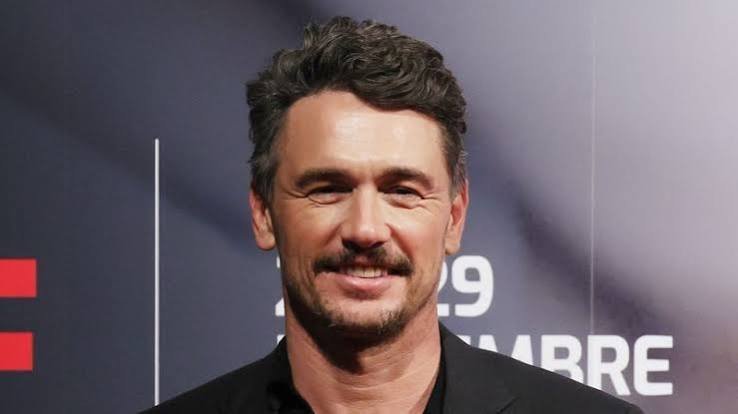
James Franco has rarely followed the career pattern expected of a successful Hollywood actor. At different points, he has presented himself as a film star, television performer, director, novelist, poet, painter, university lecturer, student and experimental artist. He moved between superhero films and literary adaptations, broad comedies and art-house dramas, sometimes working on several unrelated projects at once.
That restless output made Franco one of the most difficult actors of his generation to define. He could deliver an intensely controlled performance in 127 Hours, then appear as an exaggerated version of himself in a comedy. He pursued prestigious university qualifications while accepting roles that appeared deliberately ridiculous. He directed films based on respected American novels, yet also produced small experiments that reached limited audiences.
For years, this unpredictability worked in his favour. Franco seemed less interested in protecting a conventional leading-man image than in testing how many identities he could occupy. His reputation later changed sharply when former students and other women accused him of sexual misconduct and exploitation. The allegations, lawsuit and resulting professional retreat placed his teaching, ambition and use of power under much closer examination.
Franco’s story is therefore not simply about an actor with unusual interests. It is about the difference between productivity and judgement, public reinvention and private conduct, artistic curiosity and uncontrolled ambition.
The public image never settled into one shape
James Edward Franco was born in Palo Alto, California, in 1978. His mother, Betsy, worked as a writer and artist, while his father ran a Silicon Valley business. Franco initially enrolled at the University of California, Los Angeles, but left to pursue acting, supporting himself partly through work at McDonald’s while attending classes. His early career consisted of television appearances and small film parts before Freaks and Geeks gave him his first widely noticed role.
Freaks and Geeks lasted for only one season, yet its influence grew after cancellation. Franco played Daniel Desario, a charismatic but directionless teenager whose confidence often concealed insecurity. The role established a pattern that later appeared throughout his career. Franco was especially convincing when playing men who cultivated an image while struggling beneath it.
His performance as James Dean in the 2001 television film brought greater attention. Franco did not approach Dean as a simple impersonation. He reportedly studied the actor’s speech, physical habits and emotional isolation, creating a performance that earned him a Golden Globe. The role also encouraged journalists to compare Franco with Dean, linking him to the familiar idea of the handsome, troubled outsider.
The comparison was useful but limiting. Franco possessed Dean’s brooding screen presence, although his own ambitions extended beyond acting. He appeared unwilling to remain only a performer, even when acting provided his strongest opportunities.
The Spider-Man trilogy turned him into an internationally recognised actor. As Harry Osborn, Franco played Peter Parker’s friend, rival and eventual enemy. The films gave him financial security and mainstream visibility, but they did not define the work he pursued afterwards. Rather than building a career around similar studio productions, he shifted towards unusual dramas, literary figures, independent films and comedy.
Franco’s taste for contradiction became particularly clear in 2008. He played Scott Smith, the partner of politician Harvey Milk, in Gus Van Sant’s Milk. During the same period, he appeared opposite Seth Rogen in the cannabis comedy Pineapple Express. One role demanded restraint and emotional realism; the other required loose, energetic absurdity.
That contrast was not accidental. Franco seemed to value the ability to confuse expectations. He resisted the belief that a serious actor must behave seriously in every project. His comic work also allowed him to undermine the intense image created by James Dean and his dramatic performances.
His long-running partnership with Seth Rogen developed from that instinct. Their screen personalities worked because they differed. Rogen appeared conversational, anxious and grounded, while Franco often played men who were charming, unpredictable or detached from normal social rules. Their friendship supported films including Pineapple Express, This Is the End and The Interview.
Franco’s willingness to mock himself became one of his strongest comic tools. In This Is the End, he played a vain, self-important version of James Franco who filled his home with expensive art and treated celebrity connections as proof of personal worth. The performance worked because audiences already recognised elements of the image. He exaggerated his artistic seriousness, social status and confidence until they became targets.
Self-parody gave Franco a degree of protection. When a celebrity openly mocks his own pretensions, critics can find it harder to accuse him of lacking self-awareness. Yet the tactic also blurred the difference between Franco’s genuine personality and his constructed public character. Interviews, comedy sketches and art projects sometimes appeared to belong to the same continuous performance.
His strongest roles came from restriction rather than excess
Franco often appeared most focused when a role reduced his options. Danny Boyle’s 127 Hours offered the clearest example. The film told the real story of mountaineer Aron Ralston, who became trapped by a boulder in a Utah canyon and amputated his own arm to survive.
Most of the film depended on Franco alone. He could not rely on a large cast, rapid changes of location or conventional dialogue. He had to communicate fear, boredom, denial, exhaustion and physical deterioration within a confined space. The performance earned him an Academy Award nomination for Best Actor.
The film exposed an important feature of Franco’s talent. His natural energy could become scattered when a project allowed unlimited experimentation. Under firm direction and narrow dramatic conditions, that same energy became concentration.
Franco’s performance as Allen Ginsberg in Howl used a different kind of control. The film combined courtroom scenes, animation and dramatised readings of Ginsberg’s poetry. Franco avoided treating the writer merely as an eccentric public figure. He focused on the rhythm of Ginsberg’s speech and the tension between his private sensitivity and public confidence.
His role in Harmony Korine’s Spring Breakers moved in the opposite direction. Franco played Alien, a drug dealer and aspiring rapper with braids, jewellery, guns and a carefully manufactured street persona. The character could easily have become a disposable caricature. Franco instead treated Alien’s performance of toughness as evidence of loneliness and desperation.
Alien constantly displays his possessions, repeating that he has accumulated everything he needs. The objects reveal insecurity rather than success. His home, weapons and money function like stage props, much as restaurant chairs might help establish the mood of a carefully designed commercial space. Alien has built a setting in which he can perform his chosen identity, but he cannot turn that identity into emotional stability.
Franco’s work in The Disaster Artist also depended on studying a man who transformed himself into a character. He portrayed Tommy Wiseau, the mysterious filmmaker behind The Room, a production widely celebrated for its unintended comedy. Franco directed the film as well as playing its central role.
A weaker version of the performance might have reduced Wiseau to his accent and physical mannerisms. Franco instead explored the painful ambition behind the spectacle. Wiseau wants recognition, friendship and creative authority, yet he lacks the technical ability and social judgement required to achieve them through conventional means.
The role suited Franco because Wiseau represented an extreme version of artistic self-invention. Both men were fascinated by authorship, control and the possibility of creating an identity through work. Franco’s performance earned a Golden Globe, although the film’s awards campaign later unfolded beside growing public scrutiny of his conduct.
His weaker directing projects revealed the danger of his ambitions. Franco adapted works by major authors including William Faulkner, Cormac McCarthy and John Steinbeck. These films showed genuine literary interest, but several received limited praise. Dense novels require more than respect to succeed on screen. They demand ruthless selection, structural clarity and a director willing to discard admired material.
Franco sometimes seemed more attracted to the act of adapting a famous book than to the discipline required to reshape it. His productivity became part of the problem. Each new film, book, course or art project reinforced the impression that completion mattered as much as refinement.
This distinction explains why his acting frequently surpassed his directing. As an actor, Franco could work within another filmmaker’s structure. As a director, he had to impose limits on himself, and limits were rarely central to his public method.
The academic marathon was more than a celebrity hobby
Franco returned to UCLA after establishing his acting career and completed an undergraduate English degree. He then enrolled in several advanced programmes connected to writing, film and literature, studying at institutions that included Columbia University, New York University and Yale. His academic schedule attracted almost as much attention as his films.
The unusual part was not that a wealthy actor returned to education. Many performers study privately or complete degrees between projects. Franco turned education into a visible element of his identity. He attended classes, discussed his reading publicly and incorporated academic work into films, books and exhibitions.
His schedule appeared nearly impossible. Reports described him moving between university courses, film sets, teaching posts, public appearances and writing commitments. Stories circulated about him sleeping in class, although Franco disputed the idea that a single photograph accurately represented his academic effort.
The overloaded timetable reflected both discipline and compulsion. Franco did not appear content to study one subject carefully. He pursued multiple qualifications and creative forms almost simultaneously. The scale of the undertaking made it difficult to separate intellectual curiosity from the need to accumulate achievements.
His writing frequently returned to California, masculinity, performance and adolescent uncertainty. The short-story collection Palo Alto drew on the environment of his youth and presented teenagers engaged in reckless, emotionally disconnected behaviour. Gia Coppola later adapted the book into a film.
Franco also published poetry, fiction and essays. Critical reactions varied, partly because readers could not approach the books without considering his celebrity. A little-known writer receives judgement mainly on the page. A famous actor arrives with marketing power, access to publishers and an audience before the first sentence appears.
Celebrity created opportunity but also suspicion. Some critics treated his literary work as evidence of vanity, while supporters saw an actor making a serious attempt to develop another craft. Both views contained some truth. Franco clearly possessed sustained interest in literature, but his name granted him access that emerging writers rarely receive.
His visual art created similar questions. Franco exhibited paintings, photographs, video installations and performance-based work. Some projects examined fame, identity and the boundary between sincerity and parody. Others appeared designed to provoke uncertainty about whether they were serious art, private jokes or extensions of his celebrity persona.
This ambiguity appealed to Franco. He repeatedly placed himself in situations where the audience had to ask whether he was performing. The strategy connected his acting, writing and visual work, but it could also become a convenient shield. Any failed experiment could be reframed as deliberate provocation.
Teaching added a more serious dimension because it involved authority over students. Franco taught or participated in film and writing courses at several institutions and helped operate Studio 4, an acting and film school. His position combined professional celebrity, educational authority and potential access to the entertainment industry.
Students might reasonably have believed that performing well in his classes could lead to introductions or career opportunities. That imbalance later became central to allegations against him. What had once appeared to be another branch of his creative life came to represent the risks of combining teaching with celebrity power.
The academic period remains revealing because it cannot be dismissed as a brief publicity exercise. Franco devoted years to study, teaching and writing. The problem was not a lack of interest. It was his recurring failure to recognise where curiosity, status and responsibility required firmer boundaries.
The lesser-known details reveal a pattern of restless self-creation
Franco’s early experience working at McDonald’s became part of his personal mythology. He later wrote about practising accents with customers while employed there. The story captures his tendency to treat ordinary situations as informal acting laboratories.
His fascination with identity extended beyond fictional characters. Franco repeatedly chose real or recognisable men whose lives depended on public performance. James Dean represented rebellious masculinity. Allen Ginsberg turned personal experience into public poetry. Aron Ralston reconstructed his life through a survival story. Tommy Wiseau created a mysterious biography while pursuing fame on his own terms.
Franco was not drawn only to successful figures. He appeared equally interested in failed ambition, damaged confidence and people who could not fully control how others perceived them. This interest helps explain why some of his most memorable roles contain both comedy and sadness.
His family also produced an interesting contrast. His younger brother, Dave Franco, built a more selective acting career before moving into directing. Dave’s public image has generally appeared less chaotic and less academic. The brothers worked together in The Disaster Artist, where Dave played Greg Sestero opposite James’s Tommy Wiseau.
Their collaboration showed how different temperaments could operate within one family. James often made abundance part of his identity; Dave developed a reputation for narrower choices. One seemed determined to occupy every creative role available, while the other moved more gradually between acting, writing and directing.
Franco’s involvement in soap opera offers another example of his disregard for conventional career hierarchy. After gaining major film roles, he joined the daytime series General Hospital as an artist and criminal named Franco. The character’s name deliberately merged the actor with the role.
The appearance confused viewers because established film stars rarely accept recurring soap roles without a clear commercial reason. Franco treated the programme partly as performance art and partly as an acting experiment. The project allowed him to cross between high culture, popular entertainment and self-reference.
He also appeared in music videos, hosted the Academy Awards, wrote columns, made short films and participated in projects that resisted easy classification. His 2011 Oscar-hosting appearance with Anne Hathaway became notorious for its awkward energy. Hathaway appeared eager to keep the programme moving, while Franco seemed detached from the occasion.
The event harmed his public reputation, yet it also reflected a broader weakness. Franco often appeared attracted to opportunities because they were unusual rather than because they suited his abilities. Hosting a major live broadcast requires responsiveness, warmth and disciplined preparation. His distant manner, useful in certain dramatic roles, worked poorly in that setting.
His productivity also created uncertainty around collaboration. When one person directs, performs, writes, teaches and produces at once, colleagues may struggle to determine where meaningful oversight exists. Franco’s career repeatedly placed him at the centre of projects with few visible limits on his authority.
The pattern helps explain why his later controversy could not be separated from his professional persona. The same structures that allowed constant experimentation also concentrated influence around him.
Allegations changed the meaning of his earlier ambitions
In 2018, several women accused Franco of sexually inappropriate or exploitative behaviour. Some had studied at Studio 4. The accusations included claims that students felt pressured during sexually explicit acting situations and that professional opportunity was used to create an unequal environment.
In 2019, former students filed a lawsuit connected to the school. Franco and associated parties later reached a settlement worth more than $2.2 million. The agreement resolved the civil case without a trial and without an admission of wrongdoing.
Franco later acknowledged that he had slept with students and described those relationships as consensual, while also discussing his past behaviour and efforts to change. Consent, however, does not remove every ethical concern where a teacher holds status, influence and perceived access to employment.
The allegations changed how his teaching career was viewed. Activities once presented as generous attempts to share professional knowledge now required examination through the power held by a famous instructor. The issue was not simply whether Franco considered himself helpful. It was whether students could disagree, refuse or leave without fearing the loss of an opportunity.
His long creative partnership with Seth Rogen also ended. Rogen publicly distanced himself and indicated that he did not plan to continue working with Franco. Franco later confirmed that the friendship was no longer active.
Major American roles became less frequent after the allegations. Franco spent several years outside the centre of Hollywood and later returned through international and independent productions. In a 2024 interview connected to the film Hey Joe, he discussed the collapse of his career, changes in his personal life and his wish to direct again.
A return to work does not settle the questions surrounding him. Film industries often allow controversial figures to re-enter through smaller foreign productions before testing whether larger audiences and studios will accept them. Professional activity can resume without producing public agreement about accountability.
Franco’s career now carries a permanent division. His performances remain available, and several retain clear artistic value. 127 Hours, Milk, Spring Breakers and The Disaster Artist demonstrate range, technical control and unusual instincts. His weaker projects also remain evidence of a man who often mistook constant activity for artistic progress.
The controversy cannot be treated as an unrelated final chapter. It connects directly to the traits that shaped his public identity: appetite, access, blurred roles and resistance to limits. Franco’s ambition allowed him to cross boundaries between disciplines. His conduct raised the question of which boundaries should never have been crossed.
James Franco remains interesting because no simple description fully contains him. He was a mainstream star who pursued experimental art, a serious student who turned education into celebrity mythology, and a skilled actor whose need to control entire projects often weakened them. He could analyse constructed masculinity on screen while failing to judge the power attached to his own position.
His story offers no neat separation between talent and character. The same career can contain disciplined performances, uncontrolled output, genuine curiosity, vanity, achievement and harm. Understanding Franco requires holding those facts together rather than choosing the version that is easiest to admire or dismiss.
