
Electric bikes can make daily commuting faster and less tiring, but motor assistance alone does not guarantee a comfortable ride. Poor bike fit, an unsuitable saddle, rough tires, or badly placed luggage can still cause fatigue. The key is to match the bike and its setup to your body, route, and everyday riding habits.
Start With a Bike That Fits Your Riding Style
Comfort begins with choosing a bike that suits how you ride. Different e-bikes offer upright city geometry, sportier riding positions, step-through frames, wider tires, and commuter-focused accessories.
An upright position can reduce pressure on the wrists and lower back, while a more forward position may feel efficient on longer rides. Frame size is equally important. A bike that is too large can feel awkward at stops, while one that is too small may create a cramped pedaling position.
Consider your average distance, road conditions, traffic, and number of daily stops before comparing advanced features.
Make Stop-and-Go Riding Easier
City commuting often involves traffic lights, crossings, tight corners, and frequent changes in speed. A bike that feels stable at low speed can make these conditions less stressful.
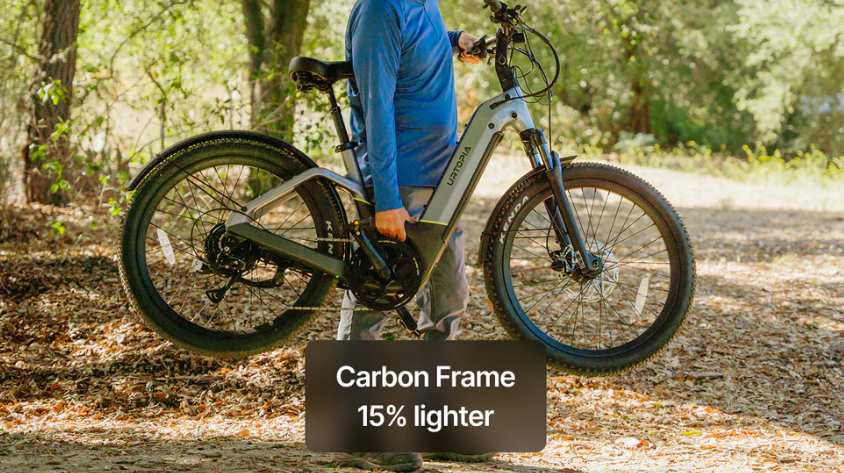
A lightweight electric bike may be easier to control when starting at intersections, walking through crowded areas, or making slow turns. It can also require less effort when the rider needs to reposition or push the bike.
Smooth motor assistance is just as important. Gradual power delivery provides better control than sudden acceleration, especially in busy streets. Easy-to-reach brakes and a frame that allows quick foot placement also improve confidence.
Adjust the Saddle for Better Support
An uncomfortable saddle does not always need to be replaced. Start by checking its height, angle, and position.
At the lowest pedal point, the knee should remain slightly bent. A saddle that is too low can strain the knees, while one that is too high may cause the hips to rock. The saddle should usually stay close to level, since a strong downward tilt can push the rider forward and increase pressure on the hands.
Make one small adjustment at a time and test it over several rides. This makes it easier to identify which change improves comfort.
Improve Handlebar and Wrist Position
Handlebar height and reach affect the wrists, shoulders, neck, and lower back. Riders who feel pressure in their palms may be leaning too far forward or gripping the bars too tightly.
The elbows should remain slightly bent so the arms can absorb road vibration. Wrists should also stay relatively straight rather than bending sharply upward or inward.
Raising the handlebars or shortening the reach may create a more relaxed posture. Ergonomic grips and cycling gloves can provide extra support, but they should not replace proper bike adjustment.
Use Pedal Assist More Efficiently
Using the highest assistance level at all times may feel easy, but it can cause abrupt acceleration and use battery power quickly. Moderate assistance is often smoother for normal commuting.
Lower settings work well on flat roads, while stronger support can be saved for hills, headwinds, or heavy loads. Shift into an easier gear before stopping so restarting requires less force.
A steady pedaling rhythm is generally more comfortable than pushing a heavy gear slowly. The motor should support natural movement rather than create an uneven riding pattern.
Choose Tires for Your Daily Roads
Tires influence comfort, grip, and handling. Narrow tires at high pressure may roll efficiently on smooth pavement but can transmit more vibration. Wider tires can provide better cushioning on cracked roads, brick paths, or uneven bike lanes.
Tire pressure should remain within the manufacturer’s recommended range. The maximum pressure printed on the tire is not always the most comfortable setting. Slightly lower pressure may improve grip and cushioning when it is appropriate for the rider’s weight and road conditions.
Check tire pressure regularly, since underinflated tires can make steering heavy and increase the risk of damage.
Carry Bags Without Affecting Balance
A heavy backpack can strain the shoulders and trap heat against the rider’s back. For regular commuting, a rear rack with panniers may provide a more comfortable solution.
Keep heavier items low and distribute the load evenly. A front basket is useful for lighter objects, but too much weight near the handlebars can affect steering.
Secure loose straps before riding and keep everything away from the wheels, chain, and pedals. Packing essential commuting items in advance can also make daily departures quicker.
Dress for the Conditions
Riders may still become warm, cold, or wet even with electric assistance. Light layers are useful because they can be removed or added as the temperature changes.
A breathable windproof layer can improve comfort in cool weather, while a compact waterproof jacket helps during unexpected rain. Gloves protect hands from cold air, and reflective details improve visibility during early morning or evening commutes.
Clothing should be selected for the conditions experienced while riding, not only the temperature felt before leaving.
Build a Better Commuting Routine
Regular preparation can prevent many comfort problems. Check the battery, tire pressure, brakes, and lights before they cause trouble during a ride.
Choose routes with smoother surfaces and safer crossings, even when they are slightly longer. Leaving a few minutes earlier also allows you to ride steadily instead of rushing through traffic.
Repeated pain or numbness should not be ignored. Recheck the saddle, handlebars, and overall fit if discomfort continues. A professional bike fitting or technician inspection may help when basic adjustments are not enough.
Conclusion
Comfortable e-bike commuting depends on the complete setup rather than one premium feature. A suitable frame, correct saddle height, relaxed handlebar position, appropriate tires, balanced luggage, and sensible pedal assistance can all improve the ride. When the bike fits both the rider and the route, daily commuting becomes easier, smoother, and more enjoyable.
