
Understanding genetics can feel confusing at first, especially when you encounter terms like genotype and phenotype. However, once you break it down with simple explanations and real-life examples, the concept becomes much easier to grasp. In this article, we will explore genotype example biology in a clear and beginner-friendly way, using easy cases to help you fully understand the topic.
What is Genotype in Biology?
In biology, a genotype refers to the genetic makeup of an organism. It is the set of genes that an individual inherits from its parents. These genes carry instructions that determine various traits such as eye color, hair type, height, and even certain behaviors.
Genotypes are usually represented using letters. For example:
- AA – Homozygous dominant
- Aa – Heterozygous
- aa – Homozygous recessive
Each gene comes in pairs, known as alleles. One allele is inherited from the mother and the other from the father. The combination of these alleles forms the genotype.
Difference Between Genotype and Phenotype
Before diving deeper into genotype example biology, it is important to understand the difference between genotype and phenotype.
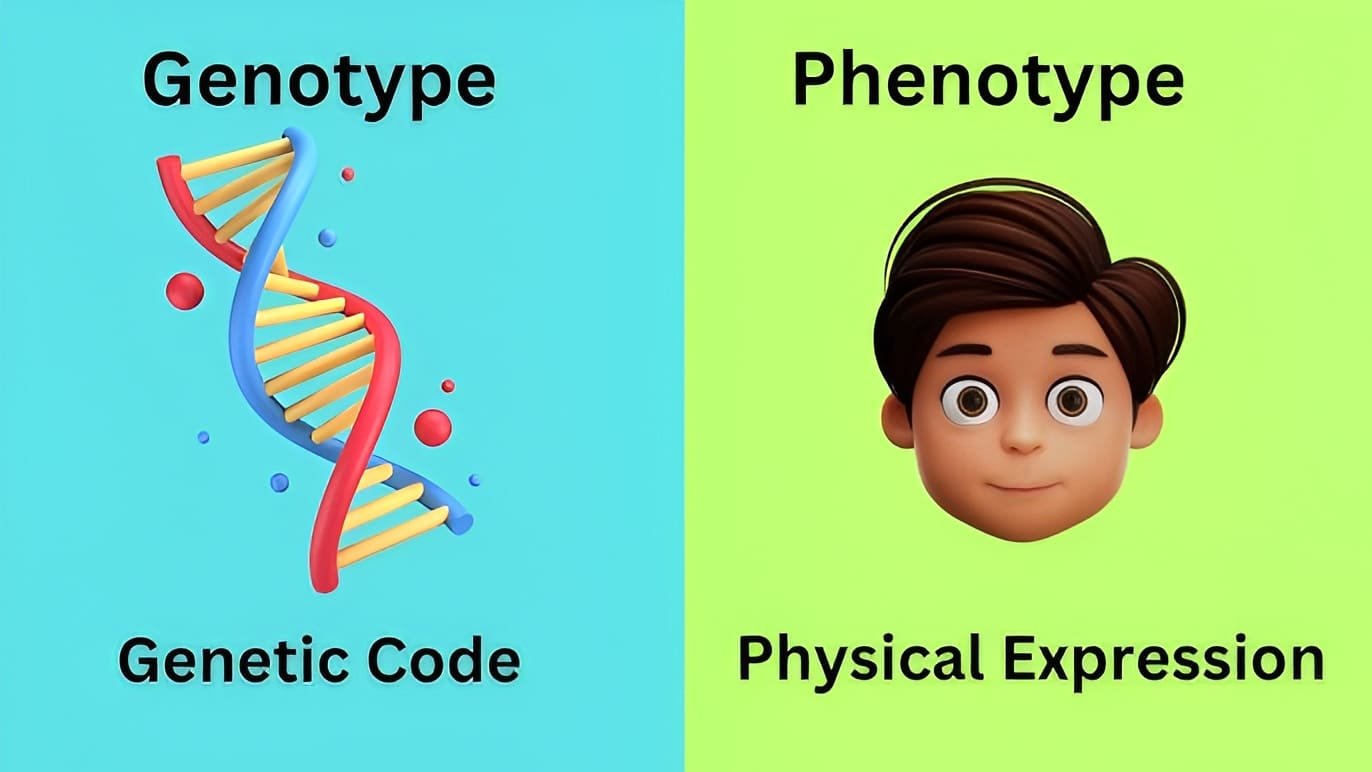
- Genotype: The genetic code (e.g., AA, Aa, aa)
- Phenotype: The physical appearance or observable trait (e.g., brown eyes, tall height)
For example, a person may have the genotype Aa, but their phenotype could still be a dominant trait like brown eyes.
Basic Genetic Terms You Should Know
To better understand genotype examples, here are a few key terms:
- Allele: Different forms of a gene
- Dominant allele: Expressed even if only one copy is present
- Recessive allele: Expressed only when two copies are present
- Homozygous: Two identical alleles (AA or aa)
- Heterozygous: Two different alleles (Aa)
These terms will help you easily understand any genotype example biology you come across.
Simple Genotype Example (Eye Color)
Let’s start with a classic example: eye color.
- B = Brown eyes (dominant)
- b = Blue eyes (recessive)
Possible genotypes:
- BB → Brown eyes
- Bb → Brown eyes
- bb → Blue eyes
Even if a person has one dominant allele (B), the dominant trait (brown eyes) will appear. This is one of the easiest ways to understand genotype example biology.
Punnett Square Explained with an Easy Case
A Punnett square is a tool used to predict the possible genotypes of offspring.
Let’s say:
- Father genotype = Bb
- Mother genotype = Bb
Possible combinations:
| B | b | |
| B | BB | Bb |
| b | Bb | bb |
Results:
- 25% BB (brown eyes)
- 50% Bb (brown eyes)
- 25% bb (blue eyes)
This simple table helps visualize how traits are inherited, making genotype example biology much easier to understand.
Genotype Example in Plants
Genetics is not limited to humans—it applies to plants as well. One famous example comes from Gregor Mendel’s pea plant experiments.
Let’s consider flower color:
- P = Purple (dominant)
- p = White (recessive)
If two heterozygous plants (Pp) are crossed:
- PP → Purple
- Pp → Purple
- pp → White
This shows how dominant traits appear more frequently, even when recessive genes are present.
Real-Life Genotype Example (Blood Groups)
Human blood groups provide another great example.
Blood types are determined by three alleles:
- IA
- IB
- i
Possible genotypes:
- IAIA or IAi → Blood group A
- IBIB or IBi → Blood group B
- IAIB → Blood group AB
- ii → Blood group O
This is a more advanced genotype example biology case because it involves multiple alleles and codominance.
Genotype Example in Traits Like Height
Height is influenced by multiple genes, making it more complex than simple dominant-recessive traits. However, we can still use basic genotype concepts to understand it.
For example:
- T = Tall (dominant)
- t = Short (recessive)
Genotypes:
- TT → Tall
- Tt → Tall
- tt → Short
In reality, height is controlled by many genes, but this simplified model helps beginners understand genotype example biology more easily.
Why Genotype Matters in Biology
Understanding genotype is important for several reasons:
- Medical research – Helps identify genetic disorders
- Agriculture – Used to improve crop quality
- Evolution studies – Explains how traits are passed over generations
- Genetic counseling – Helps predict inherited diseases
By studying genotype example biology, scientists can make better decisions in healthcare and environmental science.
Common Mistakes Students Make
While learning genetics, students often make these mistakes:
- Confusing genotype with phenotype
- Assuming dominant traits are always more common
- Forgetting that recessive traits can skip generations
- Misreading Punnett squares
Avoiding these mistakes will make your understanding much stronger.
Easy Tips to Remember Genotypes
Here are some simple tips:
- Use capital letters for dominant alleles (A, B, T)
- Use lowercase letters for recessive alleles (a, b, t)
- Practice with Punnett squares
- Relate examples to real life
The more examples you practice, the easier genotype example biology will become.
Practice Example for Better Understanding
Let’s try one more:
Trait: Hair type
- C = Curly (dominant)
- c = Straight (recessive)
Parents:
- One parent = Cc
- Other parent = cc
Punnett results:
- 50% Cc → Curly hair
- 50% cc → Straight hair
This simple case helps reinforce the concept clearly.
Conclusion
Genetics may seem complex at first, but with simple explanations and practical examples, it becomes much easier to understand. In this article, we explored genotype example biology using real-life cases like eye color, blood groups, plant traits, and more.
The key takeaway is that genotype represents the genetic makeup of an organism, while phenotype is what we actually see. By practicing with examples and understanding basic terms, anyone can master this topic.
Keep learning and practicing different cases, and soon genotype example biology will feel simple and intuitive.
