
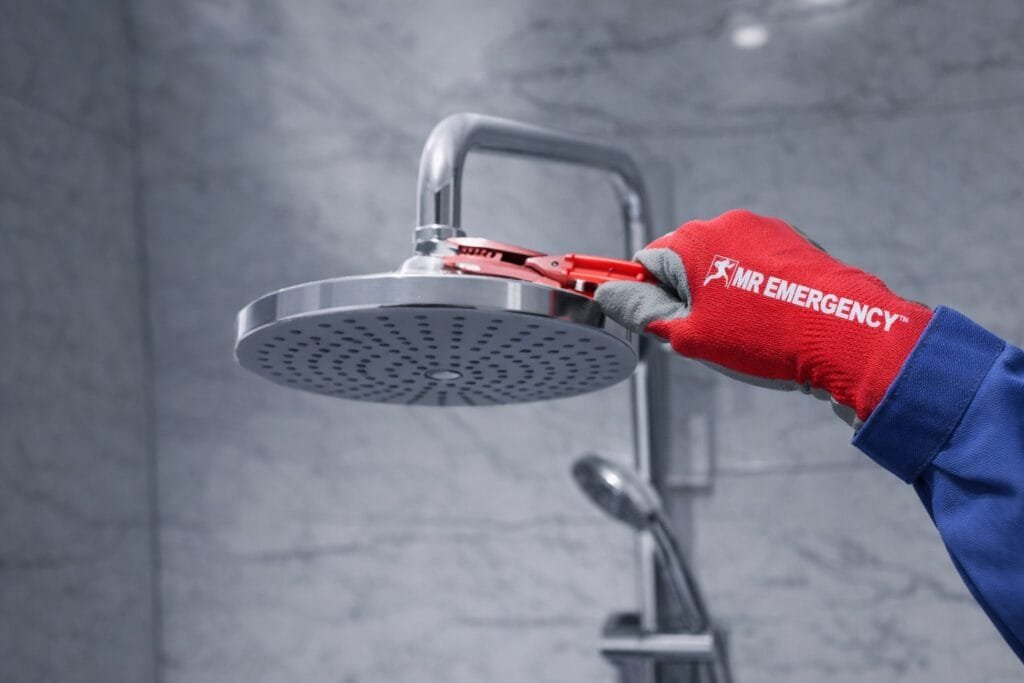
A leaking shower enclosure is one of the most destructive hidden plumbing emergencies a homeowner can face. Unlike a visible kitchen sink leak, water escaping from a broken shower pan, a failed tile seal, or a faulty drain assembly often travels quietly downward behind drywall, ruining ceilings and destabilizing subfloors before anyone notices. Initiating prompt bathroom plumbing repairs is the only way to prevent thousands of dollars in structural structural home remediation.
The Anatomy of a Hidden Shower Leak
Shower leaks generally fall into two categories: supply-side leaks (pressurized water lines feeding the showerhead) and drain-side leaks (wastewater escaping after it leaves the tub or basin).
- Failed Caulking and Grout Lines: Over years of exposure to hot water and steam, the flexible silicone caulk running along the corners of your shower stall and base pan dries out and cracks. Water seeps into these micro-cracks during every shower, rotting the greenboard behind the tiles.
- Loose Shower Drain Flanges: The drain assembly must form a perfect sandwich seal against the fiberglass shower pan or acrylic base. If the locking nut underneath the shower floor vibrates loose, wastewater bypasses the drain pipe entirely and dumps straight onto your subfloor.
- Hidden Pipe Joint Failure: Pressurized water lines running through the stud walls can develop tiny pinhole leaks due to hard water corrosion or poorly soldered copper elbows.
Step-by-Step: Resealing a Leaky Shower Base Pan
If the water damage is caused by water creeping past degraded tile corners or base boundaries, re-caulking the area is a straightforward weekend plumbing fix that yields immediate protection.
Step 1: Strip Away the Old Sealant
Use a dedicated caulking tool or a utility knife to scrape away every trace of the old, moldy silicone or latex sealant. Be careful not to scratch the acrylic pan surface.
Step 2: Sanitize and Kill Mold spores
Scrub the bare joint with rubbing alcohol or a mild bleach solution to eliminate lingering mildew and invisible soap scum film.
Step 3: Allow for Complete Desiccation
Wipe the joint dry and use a hair dryer to ensure absolutely zero moisture remains trapped deep inside the seam. Silicone will not adhere to a damp surface.
Step 4: Apply a Premium Waterproof Bead
Load a tube of 100% silicone kitchen-and-bath caulk into a caulking gun. Lay down a continuous, smooth bead along the seam, smooth it with a gloved finger, and allow it to cure for a full 24 hours before turning on the water.
When It Is Time to Call an Expert Plumber
If you notice a water stain spreading across the ceiling directly underneath your second-story bathroom, or if water bubbles out from underneath your floor tiles when you step near the shower drain, you are dealing with a structural drainage failure. Repairing an embedded shower drain or fixing a pinhole leak inside a tiled wall requires precision cutting, pipe welding, and specialized plumbing tools. A professional plumber can use specialized leak-detection gear to isolate the problem behind the wall without destroying unnecessary square footage of expensive tile work.
