
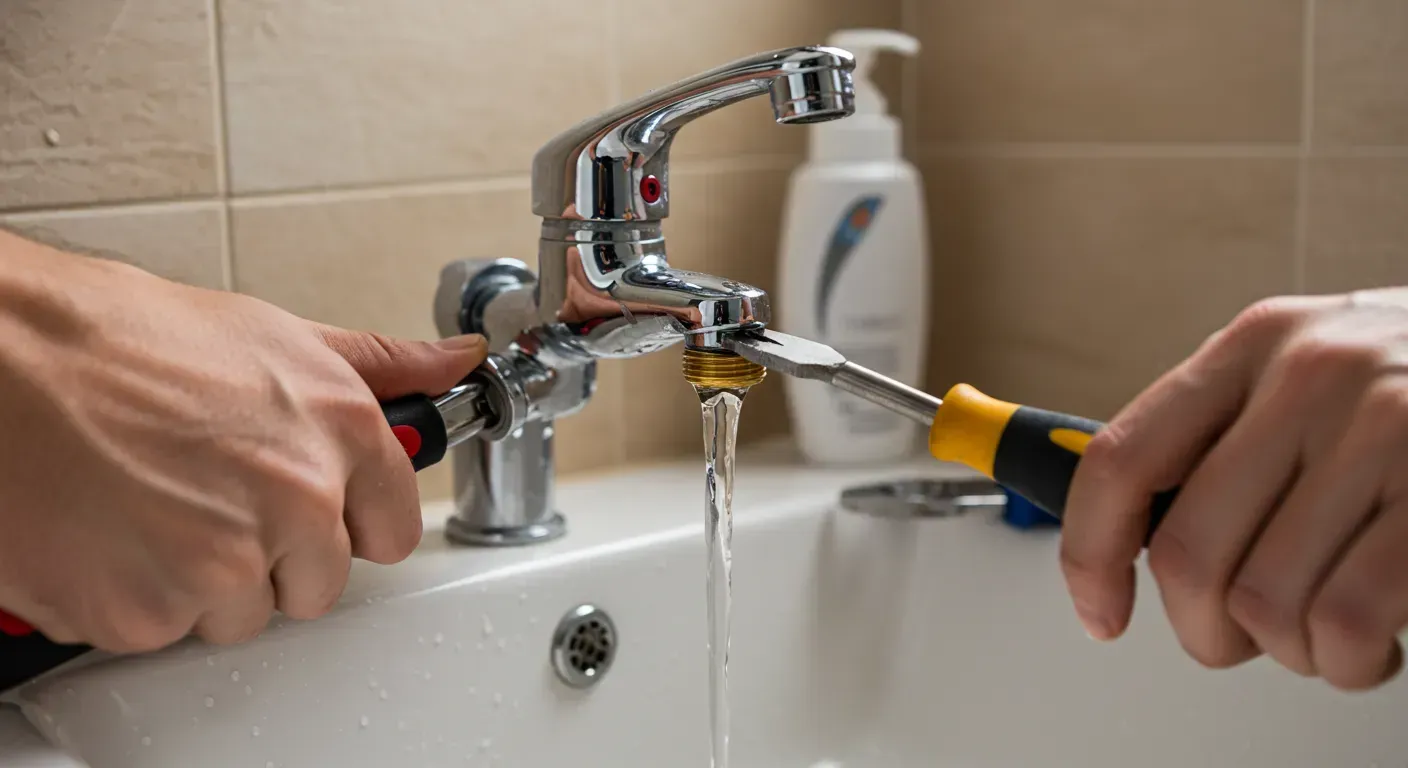
A dripping kitchen faucet might seem like a minor annoyance, but that steady “drip-drip-drip” is an expensive symptom of an underlying plumbing defect. A single faucet dripping just ten times a minute wastes more than 300 gallons of clean water over the course of a year. When you add leaky supply lines underneath the counter into the equation, you are looking at a recipe for wood rot, dangerous mold growth, and high water bills. Tackling kitchen sink and faucet plumbing repairs early keeps your kitchen dry and fully functional.
Identifying the Root Cause of Kitchen Faucet Leaks
To properly fix a kitchen faucet, you first need to identify what type of faucet mechanism you possess. Modern kitchens typically employ single-handle cartridge faucets or ball-style fixtures, while older setups use dual-handle compression valves.
- Leaks From the Aerator: If water drips out of the spout tip when the handle is turned completely off, the internal rubber seals or springs inside the cartridge have deteriorated and are no longer forming a watertight block against incoming pressure.
- Leaks Around the Handle Base: If water puddles on top of your sink deck whenever you turn the tap on, the O-rings inside the faucet body have dried out, allowing water to escape upward instead of channeling out through the spout.
- Corroded Supply Line Connections: Beneath the counter, flexible braided stainless steel lines connect the home’s copper plumbing to the faucet stems. If these lines are bent too tightly or are older than a decade, the internal rubber hose cracks, causing a slow spray.
Step-by-Step: Replacing a Kitchen Faucet O-Ring and Cartridge
Fixing a dripping faucet is highly cost-effective compared to buying an entirely new fixture. Here is a simple walkthrough for a standard single-handle model.
Step 1: Kill the Local Water Supply
Reach under your kitchen sink basin and turn both the hot and cold shut-off valves clockwise until tight. Turn on the faucet to verify no water comes out.
Step 2: Expose the Internal Cartridge
Remove the small red/blue index button on the handle to reveal the set screw. Loosen it with an Allen wrench, pull the handle off, and unscrew the decorative chrome locking collar by hand.
Step 3: Remove the Retaining Nut and Swap Cartridges
Use an adjustable wrench to remove the brass retaining nut holding the cartridge in place. Pull the old cartridge straight up. Clean out any debris or mineral scale from the brass valve housing before dropping in your brand-new matching cartridge.
Step 4: Inspect Base O-Rings and Reassemble
If the leak was at the base of the handle, pull the outer spout sleeve off, replace the thick black rubber O-rings located on the body, coat them in silicone plumber’s grease, and reassemble the entire assembly.
When to Seek Professional Plumbing Assistance
If your kitchen pipes are made of outdated, rigid copper or if the shut-off valves underneath your sink are frozen solid and refuse to turn, DIY attempts can crack the main solder joints. A licensed plumber can upgrade your under-sink infrastructure with modern, quarter-turn ball valves and reliable PEX lines, ensuring your kitchen sink plumbing setup remains secure and leak-free for decades to come.
