
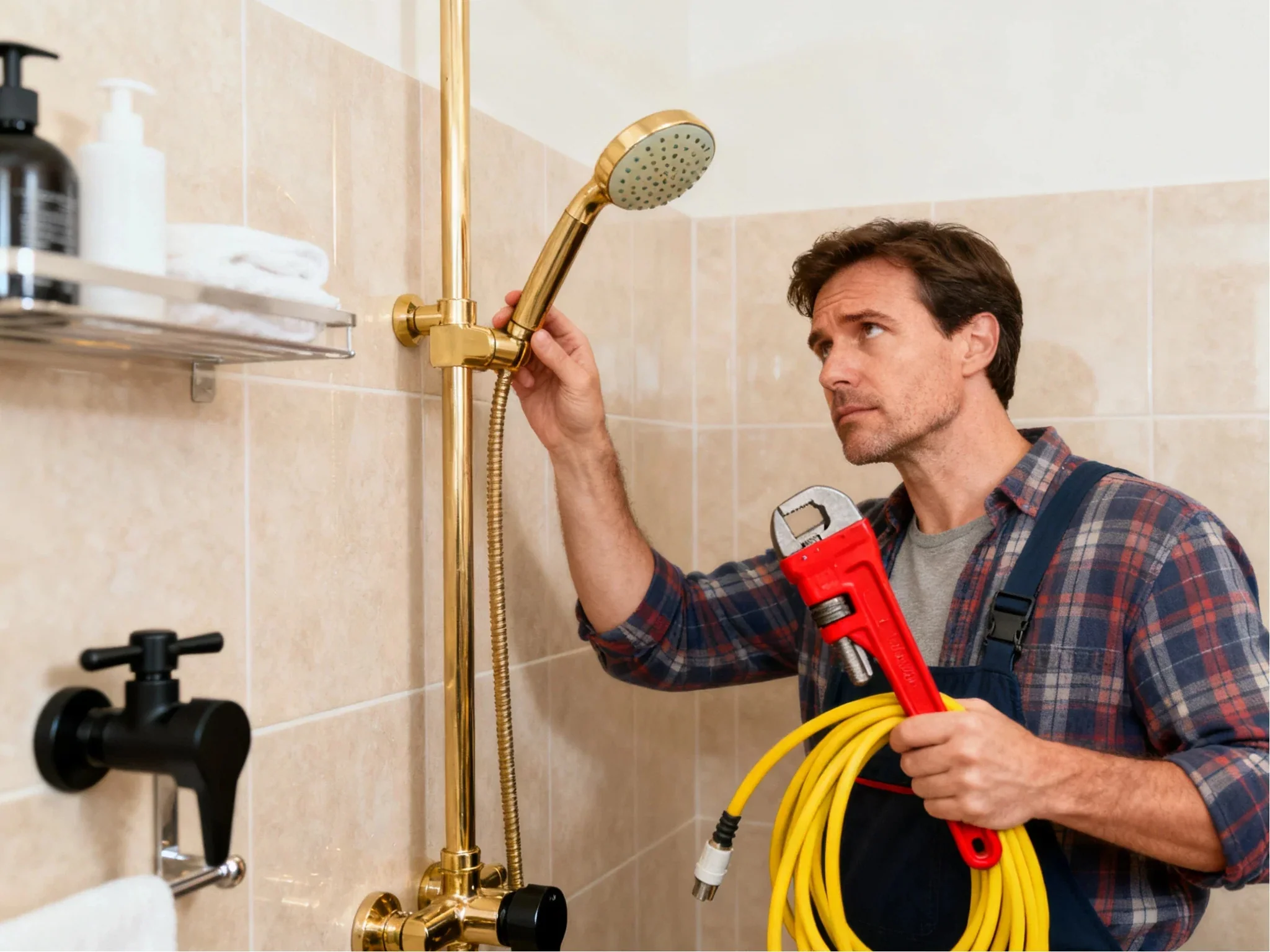
There are few household frustrations quite like stepping into the bathroom expecting a rejuvenating hot shower, only to be met with a weak, lukewarm drizzle. Low water pressure in a bathroom shower is an incredibly common plumbing issue, but it does not always mean you need to tear open your tile walls or replace your entire main line. Frequently, the problem is localized right at the showerhead or inside the hidden mixing valve.
Why Your Shower Water Pressure Drops
Before diving into bathroom plumbing repairs, you need to isolate whether the pressure issue is systemic or localized to just the shower fixture itself. If the hot water pressure is perfectly fine at the bathroom sink but completely non-existent in the shower stall, the problem boils down to mineral blockages or mechanical failure within the shower hardware.
- Mineral Scale Build-Up: Most municipal tap water carries dissolved minerals like calcium and magnesium. Over months and years, these minerals precipitate out of the hot water and form hard scale deposits inside the microscopic spray nozzles of your showerhead.
- A Clogged Shower Cartridge: Hidden behind your chrome single-handle shower valve is a small plastic cartridge that mixes hot and cold water streams. If your neighborhood undergoes water main repairs, loose rust and sediment can travel up your pipes and jam the tiny inlets of this cartridge.
How to Restore Flow to a Scaled Showerhead
If mineral buildup is choking your water flow, you can easily dissolve the scale overnight using a common household item without buying expensive commercial cleaners.
The White Vinegar Method: Fill a small plastic bag with distilled white vinegar. Submerge the entire showerhead into the bag and secure it tightly around the pipe neck with a rubber band. Let it soak for 4 to 6 hours to break down calcium deposits completely.
Step-by-Step: Replacing a Faulty Shower Valve Cartridge
If cleaning the showerhead fails to restore the flow, the problem lies deeper inside the valve cartridge. Here is how to swap it out safely.
Prerequisite: Shut Off the Main Water Supply
Locate your home’s main plumbing shut-off valve and turn it completely off. Open the bathroom sink faucet to vent any remaining pressure from the lines.
Step 1: Remove the Shower Handle and Escutcheon
Pop off the decorative cap on the handle, unscrew the retaining hex bolt, and pull the handle off. Unscrew the large metal backing plate (escutcheon) from the tile wall.
Step 2: Extract the Retaining Clip
Locate the small brass metal clip holding the plastic cartridge inside the valve body. Use needle-nose pliers to pull this clip straight up and out.
Step 3: Pull and Replace the Cartridge
Use a cartridge pulling tool or pliers to grip the stem and pull the old cartridge straight out. Slide a matching replacement cartridge into the valve body, reinsert the brass clip, and rebuild the handle assembly.
When Localized Fixes Require a Professional Plumber
If you replace the cartridge and the showerhead is pristine, yet your pressure remains completely non-existent, the issue could point to a malfunctioning pressure-reducing valve (PRV) on your main plumbing supply line or corroded, restricted galvanized iron pipes inside older walls. In these advanced scenarios, attempting to fix hidden lines can result in severe wall leaks. It is highly recommended to bring in a licensed plumber to run a diagnostic pressure test on your entire home infrastructure.
